
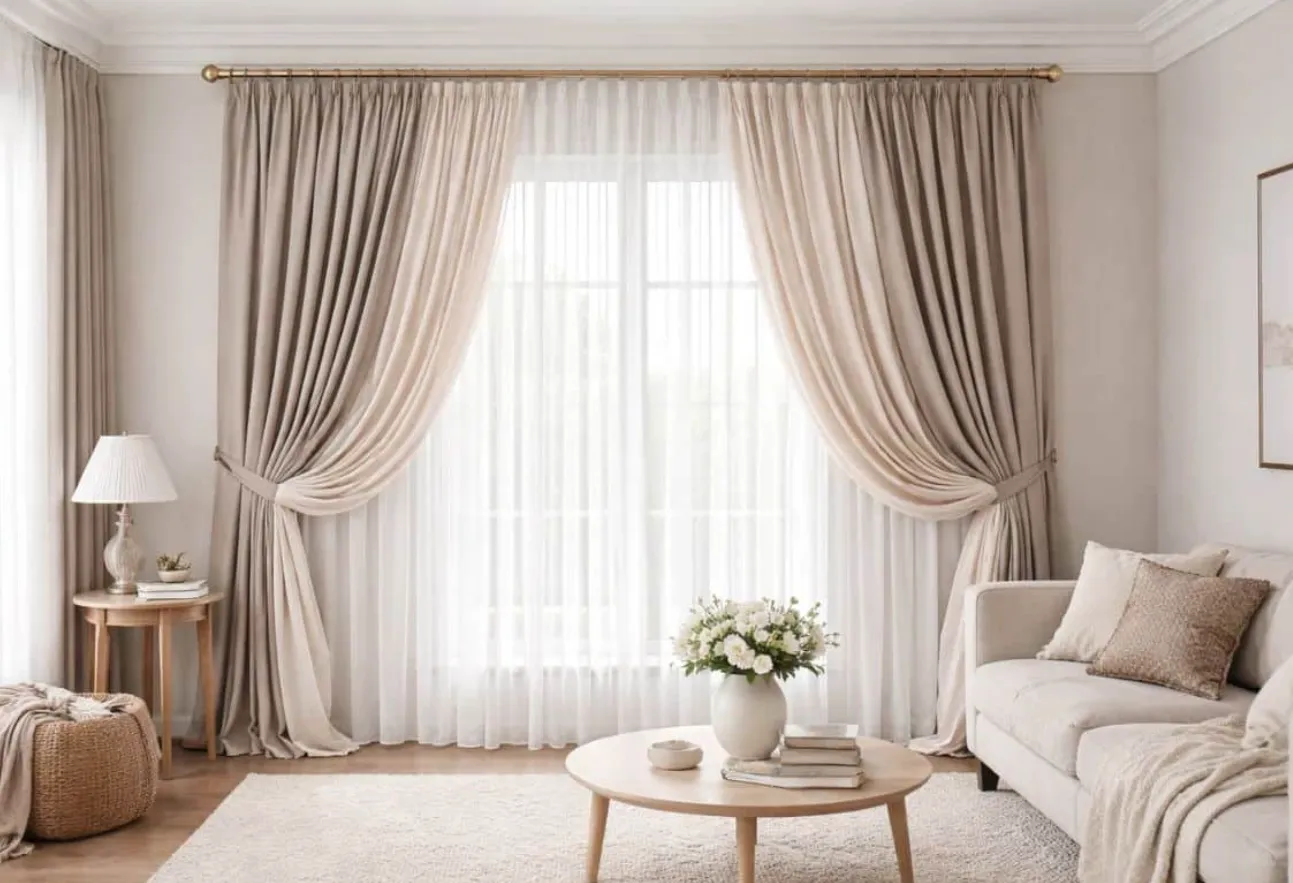
What Defines High-Quality Sheer Curtains for Modern Interior Design
Not all sheer curtains are made the same. Two curtains can look identical on the rack, cost completely different amounts, and perform worlds apart once they’re hung in an actual home. High-quality sheer curtains are defined by specific, measurable factors. Fabric structure, weave consistency, light transmission rate, UV filtering capacity, and hanging behaviour under real conditions. Understanding what separates a quality sheer from a cheap one prevents you from making a $200 mistake that ends up looking worse than nothing at all.
What Does Fabric Composition Tell You?
Everything, if you know what to look for.
Polyester sheers dominate the lower end of the market. They’re cheap to produce, resistant to shrinking, and easy to wash. The problem is they often have an unnatural sheen, don’t drape as well as woven natural blends, and look visibly synthetic in rooms with strong natural light.
Linen-blend sheers have a more organic texture. They scatter light in a warmer, more natural way. The trade-off is they wrinkle more easily and require more care. Pure linen sheers are a premium option that suits high-end interiors but isn’t practical for most households.
Polyester-linen blends hit the sweet spot. They offer the natural texture and light behaviour of linen while maintaining the durability and washability of polyester. This is where most serious interior designers land for everyday residential use.
How Does Weave Density Affect Performance?
It directly controls light, privacy, and longevity.
A loose weave allows more light through but provides very little UV filtering or privacy. It’s decorative more than functional. A tighter weave filters more UV, provides better daytime privacy, and adds structural integrity to the fabric.
Look for GSM (grams per square metre) as your primary benchmark. Under 60 GSM is decorative only. Between 80 and 120 GSM is functional and appropriate for living spaces. Above 120 GSM starts to reduce the sheer quality of light and moves toward a semi-opaque fabric.
Weave consistency also matters. Cheap sheers often have irregular weave density across the panel. This creates visible light spots and uneven draping. Hold the fabric up to a light source before buying. The weave should be uniform across the entire panel.
Why Does Header Type Matter More Than Most People Think?
The header determines how the curtain hangs, moves, and looks daily.
Pencil pleat headers create dense, structured folds that look formal. They work well in traditional or transitional interiors but require a specific hook-and-track system and take time to adjust.
Eyelet headers are the most popular in contemporary Australian homes. The metal rings distribute weight evenly across the curtain rod, which means the fabric falls in consistent, rounded folds. They’re easy to open and close and work with most modern rod styles.
Rod pocket headers are simple and affordable but difficult to open without disturbing the pleating. They’re best for fixed, decorative panels rather than functional everyday curtains.
Wave headers are the premium option. They use a specialised track system that guides the fabric into consistent S-shaped folds. The result is a high-end, hotel-style look that holds its shape perfectly. They require the right track system to work.
What Finishing Details Separate Quality From Average?
Hem weight and stitching.
Quality sheers have weighted hems, usually a small metal chain or weighted tape stitched into the bottom fold. This keeps the fabric hanging straight even when a window is open or air conditioning is running. Without it, the curtain billows and twists constantly.
Double-stitched side hems prevent fraying over time. Single-stitched hems on cheap curtains unravel after a handful of washes.
The header stitching should be reinforced. Eyelets should have smooth metal edges that don’t snag the fabric. These aren’t luxury features. They’re minimum quality standards for a product that will be opened and closed hundreds of times per year.
Does Panel Width Affect How Sheers Look?
Yes. This is one of the most common mistakes buyers make.
A sheer panel that’s the same width as the window will look flat, tight, and institutional. Quality sheers should have a fullness ratio of at least 1.5 to 1, meaning the fabric width is 1.5 times the width of the window opening. A 2-to-1 fullness ratio creates luxurious, full folds and a genuinely premium look.
Buying undersized panels is a false economy. The curtain looks cheap regardless of fabric quality. Width creates the visual richness that makes sheers look expensive.
Are More Expensive Sheers Always Better?
Not automatically. But price is a useful indicator.
Sheers under $30 per panel are almost always compromised somewhere, whether in fabric quality, hem finishing, or weave consistency. Sheers in the $60 to $150 range from reputable suppliers cover most residential needs well. Above $200 per panel, you’re paying for premium fabric blends, custom sizing, or designer styling.
Match your spend to the room’s significance. A main living area or master bedroom warrants quality. A utility room or guest bathroom doesn’t.