
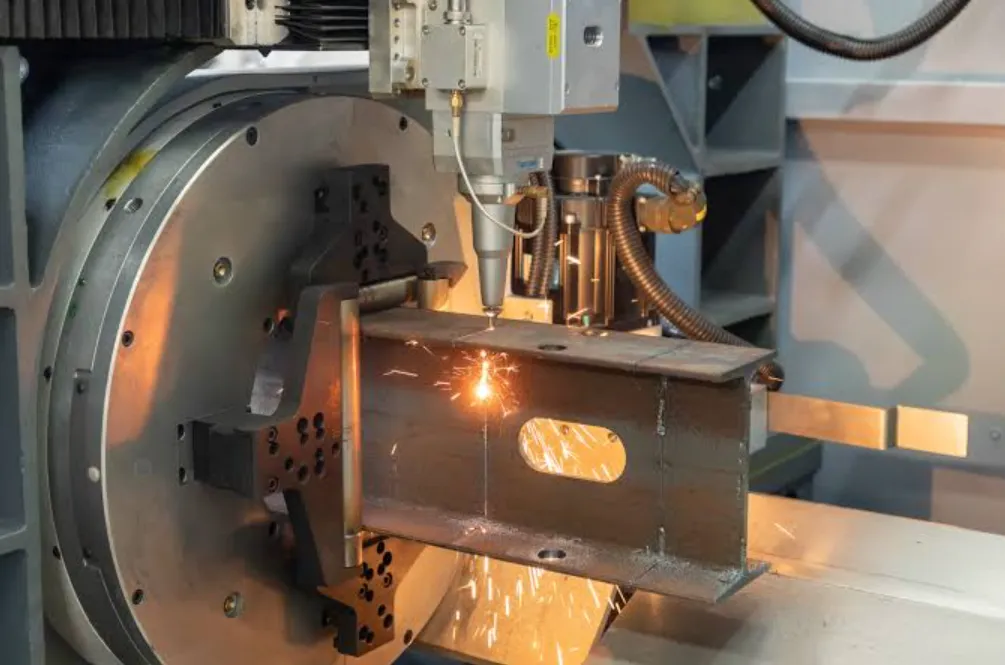
How Tube Laser Cutting Services That Deliver Improve Manufacturing Efficiency
Manufacturing efficiency isn’t just about speed. It’s about cutting less waste, reducing rework, and hitting tolerances the first time. That’s where laser cutting changes the game. Tube laser cutting services that deliver don’t just process metal faster. They eliminate the multi-step workflows that slow down production, drain labour hours, and eat into margins. The global laser cutting market was valued at USD 5.3 billion in 2022 and is projected to hit USD 9.6 billion by 2030. Industries aren’t moving this way by accident.
Why Does Tube Laser Cutting Beat Traditional Methods?
Traditional tube fabrication involves multiple separate operations. You cut the length, then drill holes, then mill slots, then deburr, then mark, then inspect. Each step is a handoff. Each handoff is a chance for error and delay.
Tube laser cutting does all of that in one machine cycle. Holes, slots, cope cuts, notches, and end profiles are cut in a single automated pass. That’s not a small improvement. On a complex structural component, it can reduce production time by 60 to 70%.
The cut quality is also in a different league. Laser-cut edges are clean, precise, and ready for welding without grinding. That matters enormously in fabrication where weld prep is a major labour cost.
What Materials Can Tube Lasers Actually Cut?
The short answer is most metals used in industrial manufacturing.
Mild steel and structural steel are the bread and butter. Round, square, rectangular, and oval profiles all run through tube lasers without issue. Wall thickness determines cutting speed, not capability.
Stainless steel is common in food processing, pharmaceutical, and architectural work. Tube lasers handle it cleanly. Aluminium extrusions used in transport, aerospace, and construction are another strong use case. Some machines also cut copper and brass, though less frequently.
What tube lasers don’t handle well is extremely thin-walled decorative tube where heat distortion becomes a factor, or very small-diameter profiles below about 20mm depending on the machine spec.
How Does Speed Translate Into Real Cost Savings?
Here’s a practical example. A fabricator producing 200 structural nodes per week traditionally might spend 4 hours per node on drilling, milling, and deburring. That’s 800 labour hours per week.
With tube laser cutting, that same node might take 20 minutes of machine time with minimal manual handling. You’re looking at roughly 70 hours per week. The labour saving is real, recurring, and compounding.
Beyond labour, nesting software optimises material use across a batch. Scrap rates on tube can drop from 12 to 15% with manual cutting to under 5% with laser-optimised nesting. On steel at current prices, that adds up fast.
What Is a 5-Axis Tube Laser and Why Does It Matter?
A 3-axis tube laser cuts in three directions. A 5-axis machine adds rotational capability, meaning it can cut angled holes, bevel ends for weld preparation, and produce complex compound cuts that a 3-axis machine simply can’t achieve.
For structural steel, offshore, and automotive applications, 5-axis capability is often non-negotiable. Bevel cutting directly from the laser eliminates a secondary grinding operation entirely. Weld seam positioning, which used to require a separate marking step, is laser-engraved as part of the cut program.
This is where modern tube laser cutting really separates from older technology.
How Does This Affect Downstream Fabrication?
Downstream is where you feel the efficiency gains most. When parts arrive at the welding station with laser-cut ends that are square, clean, and pre-bevelled, fit-up time drops dramatically.
Poor fit-up is one of the biggest hidden costs in fabrication. Gaps, misalignment, and rough edges all add weld time and reduce weld quality. A laser-cut part fits. A saw-cut, drilled, and ground part might not, even when it’s technically within tolerance.
Assembly time also drops when hole patterns are consistent and accurate. Structural assemblies that used to require shimming and jig adjustment go together faster when the parts are cut to exact spec every time.
Is Tube Laser Cutting Suitable for Short Runs?
Yes, and this is often overlooked. CNC programming for tube lasers is fast. A skilled programmer can set up a new part in under an hour. Setup time isn’t a barrier for short runs the way it is with tooled processes.
This makes tube laser cutting viable for prototypes, custom fabrication, and project work, not just high-volume production. If your business does custom structural work, that flexibility is a competitive advantage.