
Side-by-Side ATV Accidents: When the Trail Operator and the Manufacturer Both Share Responsibility for a Rollover Crash
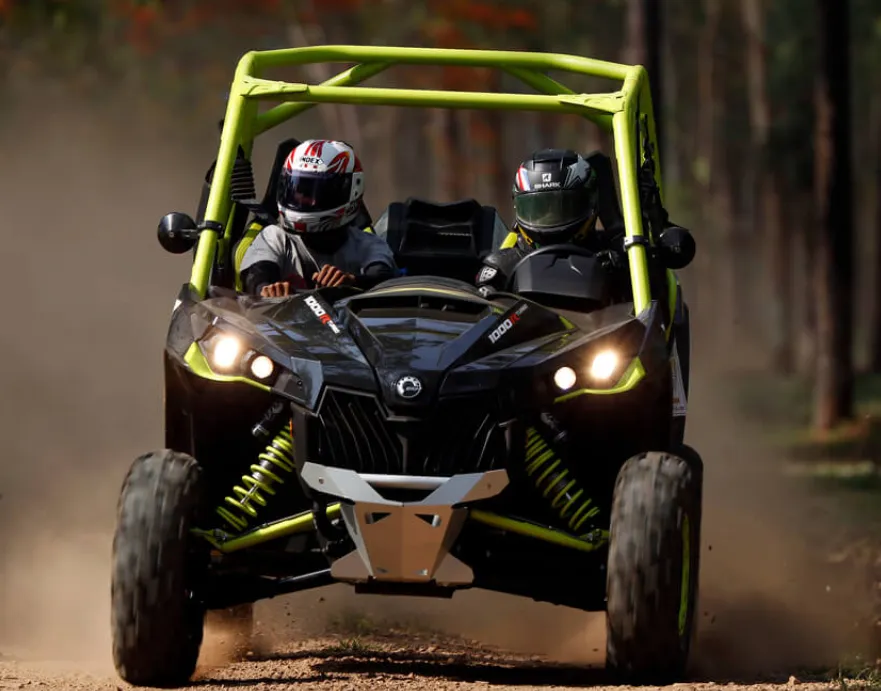
Side-by-side ATV accidents produce some of the most serious injuries in recreational vehicle crashes, and the liability analysis that follows is more complex than most accident victims expect. The instinct after a side-by-side rollover is to blame the driver’s speed or technique, and in some cases that instinct is correct. But in a significant proportion of serious side-by-side rollover crashes, the liability story involves a defective vehicle, a negligently maintained trail, or both, rather than or in addition to operator error. Understanding when each theory applies, and how they can be pursued simultaneously, is the foundation for the complete liability and damages analysis that serious side-by-side accidents require.
The Trail Operator’s Premises Liability
Trails managed by recreational facilities, resorts, parks, and private landowners are premises for which the operator owes a duty of reasonable care to recreational users. The specific duty depends on the jurisdiction and the category of user: business invitees at a paid recreational facility receive the highest duty of care, while recreational users on privately owned land in states with recreational use statutes receive a lower standard. The conditions that most commonly give rise to trail operator liability in side-by-side crashes include unmarked drop-offs at trail edges, inadequate warning of tight turns where side-by-sides’ wider track width makes rollover risk substantially higher than for traditional ATVs, trails maintained in conditions that create unexpected traction loss, and trail designs that funnel vehicles into configurations where rollover is predictable from physics regardless of the operator’s skill.
Preserving the evidence of trail condition at the time of the crash is the most urgent step in a trail premises liability case. Trail conditions change quickly with weather, maintenance, and continued use. Photographs taken at the crash site before the area is cleaned, expert inspection of the trail surface and edge conditions, and documentation of the specific turn radius and side slope at the crash location provide the physical evidence that establishes whether the trail itself was a contributing cause rather than just the setting.
Product Liability When the Vehicle Itself Failed
Side-by-side manufacturers have faced significant product liability litigation over rollover characteristics, roll cage adequacy, door latch integrity, and electronic stability control system performance. When a side-by-side rolls over at a speed or on terrain where a properly designed vehicle should not roll, or when the roll cage collapses in ways that invade the occupant space rather than protecting it, or when a door latch releases during the rollover and ejects an occupant who would otherwise have remained within the protected space, the manufacturer’s design or manufacturing defect is a cause of the injury independent of how the vehicle was being operated.
Under strict product liability doctrine, the injured person does not need to prove that the manufacturer was negligent. The defect itself, combined with the causal connection to the injury and the injury’s occurrence during reasonably anticipated use, establishes the manufacturer’s liability. Engineering experts who analyze the vehicle’s rollover dynamics, the roll cage’s structural performance during the crash sequence, and whether the stability control system performed within its design specifications provide the technical foundation for the product liability case.
The Injury Profile and the Damages Case
Side-by-side rollover crashes produce specific injury patterns tied to the crash mechanics. Traumatic brain injuries from roof contact during rollover, cervical spine injuries from the whiplash component of the rollover sequence, and crush injuries when the roll cage deforms and reduces the occupant space are the most consistently severe outcomes. These injuries require the life care planning and forensic economic analysis infrastructure that catastrophic injury cases demand, and the damages case must reflect both the immediate treatment costs and the lifetime consequences of the injuries the crash produced.
- Engineering expert: Analyzes the vehicle’s rollover characteristics, the roll cage performance, and whether a design or manufacturing defect contributed to the crash or the injury severity
- Trail reconstruction expert: Documents the trail conditions, the turn radius, and the side slope at the crash location, comparing them to applicable standards for recreational trail design and maintenance
- Life care planner: Projects the lifetime medical, rehabilitation, and support costs for a survivor with TBI or SCI from a side-by-side rollover
The Consumer Product Safety Commission’s ATV and UTV injury data documents the injury profile for utility terrain vehicle crashes nationally. Working with an experienced side-by-side ATV accident lawyer who evaluates both the product liability and premises liability theories simultaneously gives accident victims the complete accountability and damages recovery that these complex cases require.