
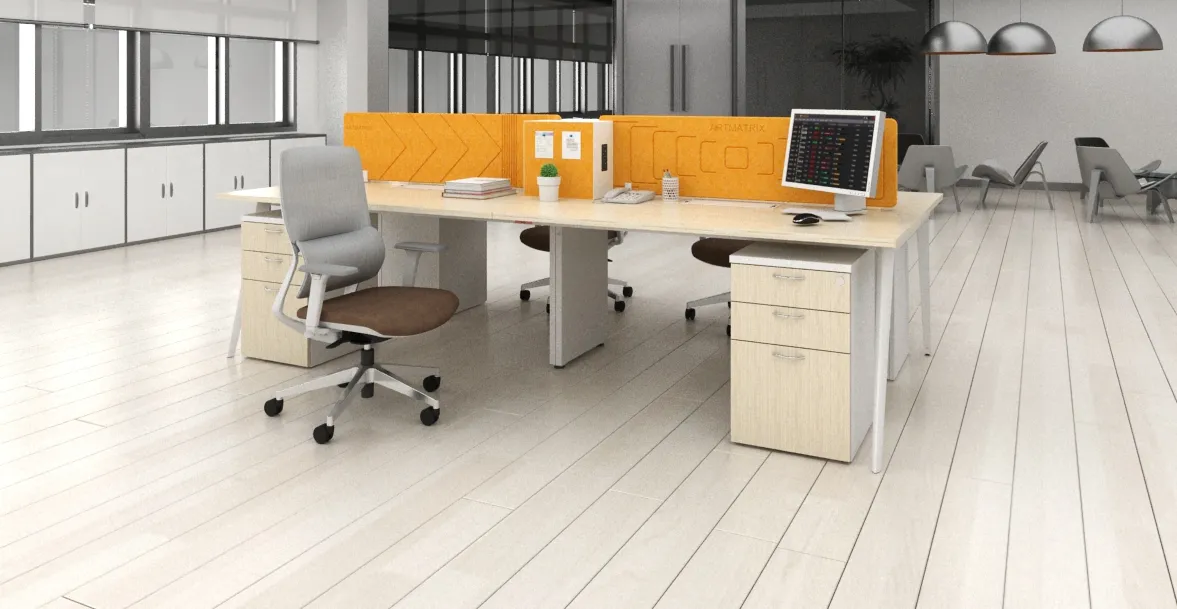
How office workstation desks support focus and efficient daily work
Your desk is basically your work headquarters for 40 hours every week. It holds your computer, your coffee, your notes, and about a million other things you need throughout the day. Office workstation desks do a lot more than just give you a flat surface to put stuff on. They organize your work tools, position your screen at the right eye level, and keep you from developing neck pain that turns into headaches. A Berkeley study tracking knowledge workers found that proper desk setup improved task completion speed by 12%. Companies that invested in quality workstation desks saw their employees take 28% fewer breaks for discomfort issues. Your desk setup affects whether you finish that big project feeling accomplished or feeling like your shoulders are made of concrete.
Why does desk height matter for staying comfortable all day?
Most people don’t realize their desk is probably the wrong height for their body. Standard desks sit at 29 inches, but that only works perfectly for someone around 5’10”. Taller or shorter workers end up hunching or reaching awkwardly all day long. Adjustable height desks solve this by letting each person set their ideal position.
Research shows that proper desk height reduces neck strain by up to 60%. When your elbows bend at 90 degrees while typing, your shoulders relax instead of tensing up. This one adjustment prevents the tension headaches that plague office workers by mid afternoon.
How does desk organization affect work speed?
Ever waste five minutes hunting for a pen or that paper you just had? Multiply that by several times daily and you’re losing serious productive time. Workstation desks with built in organization keep essential items within arm’s reach. Studies found that workers with organized desk systems saved an average of 47 minutes per day compared to those working at basic flat desks.
Cable management features matter more than people think. Tangled cords don’t just look messy. They create actual obstacles when you need to plug something in or move items around. Desks with cable trays and grommets cut down on this frustration and reduce the risk of accidentally unplugging important equipment.
What desk features help maintain focus during long tasks?
Deep work requires eliminating small distractions that break concentration. A desk with adequate surface space lets you spread out project materials without stacking things precariously. Having everything visible at once helps your brain process information 25% faster than constantly shuffling papers.
Privacy panels on shared workstations reduce visual distractions from nearby movement. One company study found that adding simple panels increased focus time by an average of 38 minutes per day. That doesn’t sound huge, but it adds up to nearly 160 extra hours of concentrated work annually per employee.
How do standing desk options change energy levels?
Sitting for eight straight hours tanks your energy and focus. The human body wasn’t designed for that. Standing desks let workers alternate positions throughout the day, which keeps blood flowing better to the brain. Research participants using sit stand desks reported 32% less fatigue at the end of workdays.
You don’t need to stand constantly. Just switching positions every hour or so makes a difference. Workers using adjustable desks burned an extra 170 calories daily compared to sitting only. More importantly, they maintained steadier energy levels instead of hitting that brutal afternoon slump that makes the last two hours of work feel impossible.